
 |
 |
 |
 |
 |

 |
- These popular beverages account for more than a quarter of all drinks consumed in the United States.
- More than 15 billion gallons were sold in 2000.
- That works out to at least one 12-ounce can per day for every man, woman and child.
Kids are heavy consumers of soft drinks, according to the U.S. Department of Agriculture, and they are guzzling soda pop at unprecedented rates.
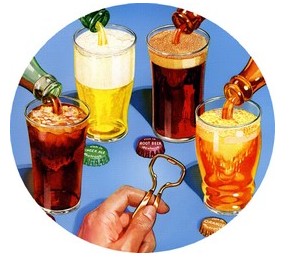 Carbonated
soda pop provides more added sugar in a typical 2-year-old toddler's
diet than cookies, candies and ice cream combined.
Carbonated
soda pop provides more added sugar in a typical 2-year-old toddler's
diet than cookies, candies and ice cream combined.
Fifty-six percent of 8-year-olds down soft drinks daily, and a third of teenage boys drink at least three cans of soda pop per day.
Not only are soft drinks widely available everywhere, from fast food restaurants to video stores, they're now sold in 60 percent of all public and private middle schools and high schools nationwide, according to the National Soft Drink Association. A few schools are even giving away soft drinks to students who buy school lunches.
As soda pop becomes the beverage of choice among the nation's young -- and as soda marketers focus on brand-building among younger and younger consumers -- public health officials, school boards, parents, consumer groups and even the soft drink industry are faced with nagging questions:
- How healthful are these beverages, which provide a lot of calories, sugars and caffeine but no significant nutritional value?
- And what happens if you drink a lot of them at a very young age?
Last week, representatives of the soft drink industry, concerned that public opinion and public policy may turn against them, will staged a three-day "fly-in" to lobby Congress to maintain soft drinks sales in schools; and to educate lawmakers on the "proper perspective" on soft drink use.
The industry plans to counter a US Department of Agriculture proposal, announced in January, that would require all foods sold in schools to meet federal nutrition standards. That would mean that snack foods and soft drinks would have to meet the same standards as school lunches.
Nearly everyone by now has heard the litany on the presumed health effects of soft drinks:
- Obesity
- Tooth decay
- Caffeine dependence
- Weakened bones
But does drinking soda
pop really cause those things?
To help separate fact
from fiction, the Health section reviewed the latest scientific findings
and asked an array of experts on both sides of the debate to weigh in
on the topic. Be forewarned, however: Compared with the data available
on tobacco and even dietary fat, the scientific evidence on soft drinks
is less developed. The results can be a lot like soft drinks themselves,
both sweet and sticky.
Obesity
One very recent, independent, peer-reviewed study demonstrates a strong link between soda consumption and childhood obesity.
One previous industry-supported, unpublished study showed no link. Explanations of the mechanism by which soda may lead to obesity have not yet been proved, though the evidence for them is strong.
Many people have long assumed that soda-- high in calories and sugar, low in nutrients -- can make kids fat. But until this month there was no solid, scientific evidence demonstrating this.
Reporting in The Lancet, a British medical journal, a team of Harvard researchers presented the first evidence linking soft drink consumption to childhood obesity. They found that 12-year-olds who drank soft drinks regularly were more likely to be overweight than those who didn't.
For each additional daily serving of sugar-sweetened soft drink consumed during the nearly two-year study, the risk of obesity increased 1.6 times.
Obesity experts called the Harvard findings important and praised the study for being prospective. In other words, the Harvard researchers spent 19 months following the children, rather than capturing a snapshot of data from just one day. It's considered statistically more valuable to conduct a study over a long period of time.
Researchers found that
schoolchildren who drank soft drinks consumed almost 200 more calories
per day than their counterparts who didn't down soft drinks. That finding
helps support the notion that we don't compensate well for calories
in liquid form.
Tooth Decay
Here's one health effect that even the soft drink industry admits, grudgingly, has merit. In a carefully worded statement, the NSDA says that "there's no scientific evidence that consumption of sugars per se has any negative effect other than dental caries." But the association also correctly notes that soft drinks aren't the sole cause of tooth decay.
In fact, a lot of sugary foods, from fruit juices to candy and even raisins and other dried fruit, have what dentists refer to as "cariogenic properties," which is to say they can cause tooth decay.
Okay, so how many more cavities are soft drink consumers likely to get compared with people who don't drink soda? This is where it gets complicated.
A federally funded study of nearly 3,200 Americans 9 to 29 years old conducted between 1971 and 1974 showed a direct link between tooth decay and soft drinks. Numerous other studies have shown the same link throughout the world, from Sweden to Iraq.
But sugar isn't the only
ingredient in soft drinks that causes tooth problems. The acids in soda
pop are also notorious for etching tooth enamel in ways that can lead
to cavities. "Acid begins to dissolve tooth enamel in only 20 minutes," notes the Ohio Dental Association in a release issued earlier this month.
Caffeine Dependence
The stimulant properties and dependence potential of caffeine in soda are well documented, as are their effects on children.
Ever tried going without your usual cup of java on the weekend? If so, you may have experienced a splitting headache, a slight rise in blood pressure, irritability and maybe even some stomach problems.
These well-documented symptoms describe the typical withdrawal process suffered by about half of regular caffeine consumers who go without their usual dose.
The soft drink industry agrees that caffeine causes the same effects in children as adults, but officials also note that there is wide variation in how people respond to caffeine. The simple solution, the industry says, is to choose a soda pop that is caffeine-free. All big soda makers offer products with either low or no caffeine.
That may be a good idea, though it raises the question of whether soda machines in schools should be permitted to offer caffeinated beverages or at least be obligated to offer a significant proportion of caffeine-free products.
It also raises the question of how one determines a product's caffeine content. Nutrition labels are not required to divulge that information. If a beverage contains caffeine, it must be included in the ingredient list, but there's no way to tell how much a beverage has, and there's little logic or predictability to the way caffeine is deployed throughout a product line.
Okay, so most enlightened consumers already know that colas contain a fair amount of caffeine. It turns out to be 35 to 38 milligrams per 12-ounce can, or roughly 28 percent of the amount found in an 8-ounce cup of coffee. But few know that diet colas -- usually chosen by those who are trying to dodge calories and/or sugar -- often pack a lot more caffeine.
A 12-ounce can of Diet Coke, for example, has about 42 milligrams of caffeine -- seven more than the same amount of Coke Classic. A can of Pepsi One has about 56 milligrams of caffeine -- 18 milligrams more than both regular Pepsi and Diet Pepsi.
Even harder to figure out is the caffeine distribution in other flavors of soda pop. Many brands of root beer contain no caffeine. An exception is Barq's, made by the Coca-Cola Co., which has has 23 milligrams per 12-ounce can. Sprite, 7-Up and ginger ale are caffeine-free. But Mountain Dew, the curiously named Mello Yellow, Sun Drop Regular, Jolt and diet as well as regular Sunkist orange soda all pack caffeine.
Caffeine occurs naturally in kola nuts, an ingredient of cola soft drinks. But why is this drug, which is known to create physical dependence, added to other soft drinks?
The industry line is that small amounts are added for taste, not for the drug's power to sustain demand for the products that contain it. Caffeine's bitter taste, they say, enhances other flavors. "It has been a part of almost every cola -- and pepper-type beverage -- since they were first formulated more than 100 years ago," according to the National Soft Drink Association.
But recent blind taste tests conducted by Roland Griffiths at Johns Hopkins Medical Institutions in Baltimore found that only 8 percent of regular soft drink consumers could identify the difference between regular and caffeine-free soft drinks.
The study included only subjects who reported that they drank soft drinks mainly for their caffeine content. In other words, more than 90 percent of the self-diagnosed caffeine cravers in this small sample could not detect the presence of caffeine.
That's why the great popularity of caffeinated soft drinks is driven not so much by subtle taste effects as by the mood-altering and physical dependence of caffeine that drives the daily self-administration.
And the unknown could be especially troublesome for the developing brains of children and adolescents. Logic dictates that when you are dependent on a drug, you are really upsetting the normal balances of neurochemistry in the brain. The fact that kids have withdrawal signs and symptoms when the caffeine is stopped is a good indication that something has been profoundly disturbed in the brain.
Exactly where that leads is anybody's guess -- which is to say there is little good research on the effects of caffeine on kids' developing brains.
Bone Weakening
Animal studies demonstrate that phosphorus, a common ingredient in soda, can deplete bones of calcium.
And two recent human studies suggest that girls who drink more soda are more prone to broken bones. The industry denies that soda plays a role in bone weakening.
Animal studies -- mostly involving rats -- point to clear and consistent bone loss with the use of cola beverages. But as scientists like to point out, humans and rats are not exactly the same.
Even so, there's been concern among the research community, public health officials and government agencies over the high phosphorus content in the US diet. Phosphorus -- which occurs naturally in some foods and is used as an additive in many others -- appears to weaken bones by promoting the loss of calcium. With less calcium available, the bones become more porous and prone to fracture.
The soft drink industry argues that the phosphoric acid in soda pop contributes only about 2 percent of the phosphorus in the typical US diet, with a 12-ounce can of soda pop averaging about 30 milligrams.
There's growing concern that even a few cans of soda today can be damaging when they are consumed during the peak bone-building years of childhood and adolescence. A 1996 study published in the Journal of Nutrition by the FDA's Office of Special Nutritionals noted that a pattern of high phosphorus/low calcium consumption, common in the American diet, is not conducive to optimizing peak bone mass in young women.
A 1994 Harvard study of bone fractures in teenage athletes found a strong association between cola beverage consumption and bone fractures in 14-year-old girls. The girls who drank cola were about five times more likely to suffer bone fractures than girls who didn't consume soda pop.
Besides, to many researchers, the combination of rising obesity and bone weakening has the potential to synergistically undermine future health. Adolescents and kids don't think long-term. But what happens when these soft-drinking people become young or middle-aged adults and they have osteoporosis, sedentary living and obesity?
By
that time, switching to water or fruit juice may be too little,
too late.
Washington
Post February 27, 2001; Page HE10
Parents (and GrandParents) are top influence on soft-drink consumption among kids. Study in Journal of the American Dietetic Association looks at trends in what kids drink and why. Flavored, carbonated drinks have been around for about two hundred years. And their popularity continues to grow--overtaking more nutritious beverages among some age groups, especially children and adolescents.
Researchers from the University of Minnesota surveyed 560 children ages 8 to 13 years old on how often they drank soft drinks and the factors that influence soft drink consumption.
Among other findings, researchers found:
* Parental soft drink intake has a stronger influence than children's peers. Parents who consume soft drinks on a regular basis may relax soft drink consumption rules and restrictions for their kids.
* Approximately 30 percent of children reported drinking soft drinks daily and 85 percent reported they usually drink regular, not diet soft drinks. Soft drink consumption was higher among boys compared with girls and intake increased with age.
* Ninety-six percent of respondents said that they liked or strongly like the taste of soft drinks. Those children who reported that they "strongly liked" the taste of soft drinks were 4.5 times more likely to drink soft drinks five or more times per week.
* The odds of drinking soft drinks almost daily was twice as likely for those who watched television 3.5 hours or more a day than those who watched less television.
* The availability of soft drinks at home and the availability of soft drink vending machines in school were both strongly associated with children's soft drink consumption.
The researchers say additional research is needed to verify these findings in a larger representative sample of children.
"Research has shown that parents are primary role models for kids and that includes their eating habits, too," said registered dietitian and ADA Spokesperson Althea Zanecosky. "Parents need to be aware of what their kids are consuming and encourage foods and beverages that are packed with nutrients. As your best guideline, be sure soft drinks are not crowding out water and other nutritious beverages like fruit juices and milk."
The Journal of the American Dietetic Association is the official research publication of the American Dietetic Association and is the premier peer-reviewed journal in the field of nutrition and dietetics. With nearly 70,000 members, the American Dietetic Association is the nation's largest organization of food and nutrition professionals. Based in Chicago, ADA serves the public by promoting optimal nutrition, health and well-being. Visit ADA at http://www.eatright.org.

Follow us on....


|
 1994 - 2023 Four Winds, Inc. USA