
 |
 |
 |
 |
 |

 |
I AM A PHYSICIAN who practices what I call natural and preventive medicine. I really think I just practice commonsense medicine, but it's not what most doctors do. Because of my training in botany, beginning as a Harvard undergraduate in the early 1960s, a lot of what I prescribe is botanical. At the meetings I attend about plant chemistry, medicinal plants, and herbal medicine, I meet botanists, plant chemists, and people who work at pharmaceutical labs, but not other physicians.
Two hundred years ago, if you studied medicine, you knew botany-most medicine consisted of giving people preparations of plants. Even now, many drugs are either of plant origin or molecular variations of chemicals originally discovered in plants. But the idea of giving a patient a plant itself is often viewed as hopelessly old-fashioned, unscientific, and outright dangerous.
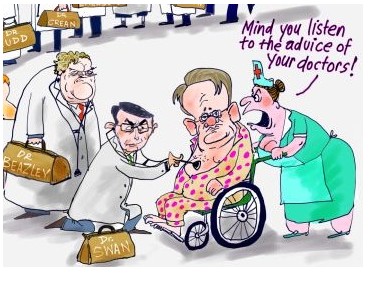 I think that's sad. It shows to what degree science and medicine have separated themselves from nature. This separation has enormous consequences for our society because, fundamentally, healing is a natural process. If you want to understand healing, you must develop a feeling for the ways of nature. Instead, medical training today isolates people from nature and even contributes to a fear of it. I have a colleague who periodically writes articles about the dangers of herbal teas, warning that, sooner or later, those who use herbal products are going to be poisoned. Most scientific rhetoric is not that overt, but the underlying message is that nature is fundamentally wild, dangerous, and unpredictable, whereas modem pharmaceuticals are safe. That message is especially annoying because it's actually the other way around, and I say that as a doctor who often has to deal with the casualties of pharmaceutical science.
There are a few herbs to be concerned about, and others may be too expensive or overhyped, but most are not dangerous and certainly not deadly. Conversely, conventional medicine causes a lot of harm in its preference for chemical drugs that are very strong and very fast-acting - it's the single greatest black mark against conventional medicine, in my opinion. There are emergencies where it's nice to have a drug that works quickly, but those situations are rare. Nevertheless, most medicine is geared toward treating all illness as a crisis. Any dedicated patient sooner or later is going to experience an adverse drug reaction, which can be as mild as hives and as major as death and permanent disability.
According to Dr. Mercola, M.D."Every year, more than 2 million Americans suffer from serious adverse drug reactions. According to the U.S. Food and Drug Administration (FDA), these reactions cause about 100,000 deaths per year, making prescription drugs the fourth-leading cause of death in the country. Compare this to the death toll from illegal drugs -- which is about 10,000 per year -- and you begin to see the magnitude of the problem.However, if you dig a little deeper you find that these reported reactions only skim the surface of what’s really going on. You see, drug side effects are not always recognized as such. Doctors often attribute them to other causes, people downplay them or do not report them altogether. And when you add in other medical errors, unnecessary procedures, and surgery-related mishaps, well the modern health care system actually becomes the LEADING cause of death in the United States. Consider, for instance, that:
The recorded error rate of ICU’s is like the post office losing more than 16,000 pieces of mail every hour of every day, or banks deducting 32,000 checks from the wrong bank account every hour, 24/7. The recorded medical errors and deaths equate to six jumbo jets falling out of the sky each day, 365 days a year.Since 2001, a recorded 490,000 people have died from properly prescribed drugs in the United States, while 2,996 people died on U.S. soil from terrorism, all in the 9/11 attacks; prescription drugs are therefore 16,400 percent more dangerous than terrorism. If deaths from over-the-counter drugs are also included, then drug consumption leaps to being 32,000 percent more dangerous than terrorism. And conventional medicine viewed as a whole is 104,700 percent deadlier than terrorism"
Chinese and Western medicine are based on very different conceptions of health and illness. One major difference is the Chinese emphasis on prevention. We have a specialty called preventive medicine, but it's concerned mostly with immunization and public sanitation. Those are important, but they're not -the essence. We should be teaching people ways to reduce the risks of disease-for instance, by improving our diets and our ability to handle stress, or by breathing properly so nervous systems are nurtured. But we don't teach such things. The Chinese way of classifying drugs is also contrary to ours. They divide their pharmacopoeia into three categories: superior drugs, middle drugs, and inferior drugs. Inferior drugs have a specific effect on a specific disease. Superior drugs are the ones that work for everything; they're panaceas, cure-alls. Ancient Chinese medical scientists did not know the immune system as we know it, but they had a clear concept of a defensive function at work in the body, and they used superior drugs to strengthen it. So of course such substances are going to be good for everything-increasing resistance to stress, for instance, and having antiviral, anticancer, and antihistamine properties.
All this is flipped on its head in Western medicine, which distrusts cure-alls. If a drug begins to work in too many conditions, we lose interest-we think that means it can't be working by a specific biochemical mechanism. What the Chinese consider inferior is our highest ideal-the magic bullet, a drug that has a precise effect on a precise condition. In our approach, you find a plant, identify its compound with the most interesting effects, and then make it available in isolated form. If possible, you tinker with the molecule to intensify its effect. In contrast, the Chinese insist there's no point in isolating or altering a plant's active elements; plants are only given in whole form, as teas and extracts.
Basically, the emphasis in the East has been to strengthen internal resistance to whatever comes at you from outside. In the West, we've tried to identify the agents of disease and then develop specific weapons against them. Obviously, both approaches have their own validity and purpose, and it seems to me that the best kind of medicine would synthesize them.
That is what I try to do in my practice. About 10 percent of the people I see are well and want preventive-lifestyle counseling. Of the other 90 percent, about half have routine conditions: hay fever, arthritis, chronic sinus conditions, digestive problems. In these cases, conventional treatments are, in my opinion, last resorts, what you do after simple methods have failed. The rest are people with cancer and other serious conditions for which there are no easy answers. In those instances, a lot of what I do is some combination of conventional treatment and alternative treatment; often the two work very well together.
I get reports from around the world of supposedly incurable conditions being cured. These reports testify to the human capacity to get better, to heal. Yet many medical doctors have an incredible lack of belief in the human body's ability to repair itself, and they pass this on to their patients: "You can't get better. You'll have to live with it. There's nothing we can do for you. You'll have to have surgery. You'll have to take this drug for the rest of your life."
In my experience, shamans who serve as healers do much better. Regardless of what methods they use-from sucking out invisible darts to giving people hallucinogenic plants-they are master psychotherapists. They're especially good at taking the belief and power that people project onto them and reflecting it back in the service of healing.
That's what medical doctors, as the priests and shamans of our technological society, should be doing. People certainly invest in them that same kind of belief The problem is that most doctors today can't serve in these capacities because of their limiting philosophy and belief system. The essential function of a priest or shaman is to act as an intermediary between the world of matter and the world of spirit. But if you don't believe that there is anything other than matter, how can you possibly fulfill that capacity?
I feel compelled to do the work I do in part because I believe that medicine, being so central to our society, is a big piece of the logjam that keeps the world going in a destructive direction. If we could change medicine, I believe we would see positive change in many other areas of our society and in the world at large. In my view, integrative medicine is a step in that direction.
Andrew Weil MD., is director of the Program in integrative Medicine at the College of Medicine at the University of Arizona in Tucson. Adopted from an essay in Ecological Medicine: Healing the Earth, Healing Ourselves (A Bioneers Book edited by Kenny Ausubel Copyright 2004. Collective Heritage Institute Published by Sterro Club Books; distributed by the University of California Press.

Follow us on....


|
 1994 - 2023 Four Winds, Inc. USA