
 |
 |
 |
 |
 |

 |
Anybody who has ever looked at an aquarium will understand that, if the water quality is allowed to get poor, fish become ill and start to swim upside down. Anybody who enjoys gardening or greenhousing knows that the soil & water quality determine to a very large degree how well their plants do.
The term Biological Terrain denotes the fluid surrounding all the cells of your body. If that fluid is not preserved as it should be, then the cells cannot but function poorly and disease invariably follows. Quoted from Guyton & Hall, textbook of medical physiology 9th edition 1996: "Therefore all cells live in essentially the same environment, the extracellular fluid for which reason the extracellular fluid is called the internal environment of the body, the milieu interieur, a term introduced more than a hundred years ago by the great 19th century French physiologist Claude Bernard. Cells are capable of living, growing and performing their special functions so long as the proper concentrations of oxygen, glucose, different ions, amino acids, fatty substances, and other constituents are available in this internal environment". Professor Claude Bernard French Physiologist 1813 - 1878
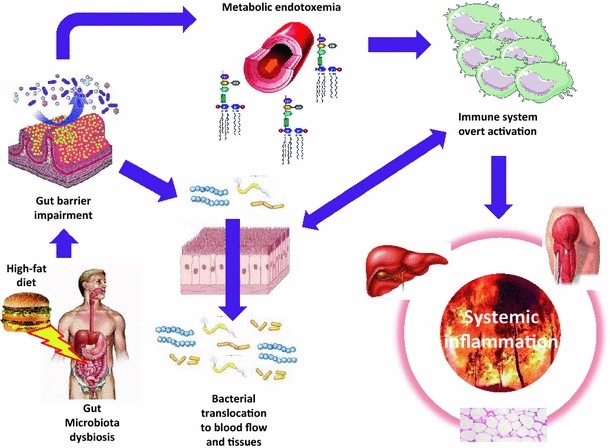
Biological Terrain
Shaun Kerry, M.D.
One school of thought�says some disease is caused by germs or some form of static disease causing microbe (the germ theory).�In order to get well, you should KILL the germs.�KILL the microbes.�KILL whatever is making you sick.�Drugs, antibiotics, chemotherapy, radiation, surgery.
The other school of thought says most disease is caused by some imbalance in the body brought about by some nutritional, electrical, structural, toxicological or biological equation.�In order to get well, you need to re-establish balance in your body.
Embracing the biological view gives new insights to the disease process and is truly another paradigm for understanding health.�One of the by-products of food metabolism is CO2, carbon dioxide.�As you know, lung respiration is one way in which your body eliminates carbon dioxide - it happens every time you exhale.�However, in order to eliminate all of the carbon dioxide that is generated from normal metabolism, the lungs would need a respiration rate far above normal breathing.�Holding this constantly accelerated rate would indeed be very difficult. Therefore, other mechanisms comes into play for handling the excess.
1) The CO2 combines with ammonia (produced from the oxidation of glutamine) and converts to urea in the liver and is excreted by the kidney.�
2) The carbon dioxide combines with water through a process utilizing the enzyme carbonic anhydrase and the co-enzyme mineral zinc.�Through this process, carbonic acid is formed which breaks down into hydrogen and bicarbonate atoms/molecules.
The term "pH" stands for potential hydrogen.
Hydrogen ions are equivalent to acidity.�Bicarbonate ions are bases (alkaline substances).�Acids are a normal by-product of metabolism.�The body has the mechanisms in place to eliminate these acids.�But poor dietary habits, prolonged stress, lack of exercise, and toxicity exposures can lead to liver and kidney malfunction, and the acids in the body do not always get eliminated as they should.�
When the body has an excess of acid it can't get rid of, it gets stored for later removal. Where? In the interstitial spaces, also called the extracellular matrix - the spaces around the cells; the mesenchyme.�
When the body stores a hydrogen molecule/atom/proton (the acid) in the extracellular matrix, it believes that one day, the acid is going to be removed.�Therefore, in order to be in balance, it knows that for every molecule of acid that gets stored in the tissues, an equal molecule of bicarb or base needs to be put into the blood because one day it will need to escort the acid out of the body.�If the body has an acid overload, it stores the acid in the tissues (the tissue pH decreases) and the blood compensates and becomes alkaline (the blood pH increases).
The total healing of chronic illness only takes place when and if the blood is restored to a slightly alkaline pH.�
Normally, human blood stays in a very narrow pH range right around 7.3.�Below or above this range means symptoms and disease.
When pH is too high or too low, microorganisms in the blood can change shape, mutate, become pathogenic, and thrive.�
When pH goes off, enzymes that are constructive can become destructive.�
When pH goes off, oxygen delivery to cells suffer.
More and more research is showing that low oxygen delivery to cells is a major factor in most if not all degenerative conditions.
Your brain needs fuel to run, and the fuel it uses is glucose.�But unlike other cells, your brain can't store glucose.
�
It depends on the second to second supply from the bloodstream - a bloodstream that is affected by pH which controls the efficiency of insulin which allows sugar to enter into cells which in turn controls blood sugar levels.
There are hundreds if not thousands of enzyme processes which take place in our body.�Many are so specific that they are like complex keys that need to "fit" into specific keyholes in order to carry out their duty.�
If blood pH is off balance even a little, some important keys are not "fitting" their respective slots.�Enzyme function and thus life itself begins to suffer.
Minerals have different pH levels at which they can be assimilated into the body.�
Minerals on the lower end of the atomic scale can be assimilated in a wider pH range, and minerals higher up on the scale require a narrower pH range in order to be assimilated by the body.�For example, as more acid accumulates in our body, it gets stored and pushed further, and ultimately it gets pushed into the cell.�When it gets pushed into the cell, the first thing it does is displace potassium and then magnesium and then sodium.
Those are three critical minerals in our body.�The potassium and magnesium will leave the body, but as a preservation mechanism the sodium will be retained.�Remember, the body knows it must place an alkaline molecule in the blood to escort out this increasing acid that is being stored in the tissues and cells.�What it will often do (when mineral reserves are low which is often the case when eating a modern American diet) is draw calcium (the most alkaline mineral known) from the bones and put it into the blood.�This leads to something called free calcium excess.
This is something you don't want and it is what is behind osteoporosis, arthritic pain, etc.�It is brought about by the body compensating for an ever increasing tissue acidosis somewhere in the body.�What you don't want to do in this case is take more calcium supplements.�With that said, you can now understand why calcium is one of the most over-prescribed supplements.�In these situations what the body really needs is more potassium, and magnesium, perhaps organic sodium, and possibly zinc which lends help to the whole proper acid breakdown process.
 These four minerals are the controlling minerals for our body's sympathetic and parasympathetic nervous system.�Simply put, the sympathetic nervous system (SNS) controls our fight or flight response mechanism.�
The parasympathetic system (PSNS) controls our rest and digest response mechanism.�It works like this:
Calcium:�Stimulatory mineral for the Sympathetic Nervous System
Magnsium: Inhibitory mineral for the Sympathetic Nervous System
Potassium:�Stimulatory mineral for the Parasympathetic Nervous System
Ssodium:�Inhibitory mineral for the Parasympathetic Nervous System
When you run an acidic condition in the body, free calcium is in excess which stimulates the SNS, magnesium isn't around to offer a balance; potassium is depleted so the PSNS is not getting stimulated to offset the SNS and it is actually being further inhibited by sodium which the body is hanging onto with respect to the loss of potassium and magnesium.
What does this give you?�A person that is acidic, hyperactive, quick to anger, moving too fast, burning out.�Just what you'd expect from somebody running too acidic.�And pushed to the extreme?�You get a person that may appear as extreme PSNS dominant, i.e. lethargic, fatigued, but what you usually have is a person pushed beyond SNS dominance to outright exhaustion.�
What we've just covered is a bit of the biochemistry that gets us to where we're going, and as you can see, it's one of the many fascinating inter-related pieces to this puzzle we call health.
�
Acid/Base - Tissue/Blood - Biochemistry
 As acids accumulate in our body, they get stored and pushed into the tissues. Where they get pushed, on a local level, is going to be in large measure where in your body or with what organ you experience problems. When the body stores this excess acid, it will compensate and place an alkaline atom/molecule in the blood, and the blood will therefore become increasingly alkaline.
Something interesting happens with the uptake of oxygen in blood with an overly alkaline environment.�With rising alkalinity, blood can increase its oxygen uptake, therefore the blood cells can hold more oxygen.�
The Bohr effect states that with rising blood alkalinity, the red blood cells can saturate themselves with ever more oxygen.�The problem is, they can't let go of it.�If the blood cells can't let go of oxygen, then the oxygen isn't getting down to the other cells of the body.�And many pathogens and cancer grow in an oxygen deficient environment.�
We have alkaline blood due to the fact we have increasingly acidic tissue and/or cells occurring somewhere in our body.�We have an alkaline blood which can't let go of its oxygen to aerate an increasingly acidic environment.
Here we have an acidic environment with no oxygen. How can anything survive in this environment?�Through anaerobic fermentation.�What ferments anaerobically (i.e. without oxygen)?�Yeast, fungus, intracellular bacteria, and virus.�Microbes will change dependent upon their environment.

Follow us on....


|
 1994 - 2023 Four Winds, Inc. USA