
 |
 |
 |
 |
 |

 |
Reprinted from Nature's Field Vol. 6 No. 5
Fibroids
by Judith G. Cobb
Please read also: Feminine Health (part 1 and part 2)
When the doctor announces to his female patient that she has fibroid
tumors, often the only word she hears is TUMORS. While this can play in
the favor of unscrupulous doctors who would choose to rush in and perform
surgery, (varying in degree from removal of the growth(s) to removal of the
uterus and ovaries) it is important for each woman to be educated enough
to know what is happening inside her body so she can have a say in her own
treatment.
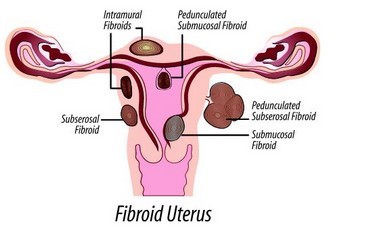 What is a Fibroid?
A fibroid tumor is a solid, bumpy growth, usually benign (99 % of the
time), located on the outside wall, inside wall, or in the muscular tissue of
the uterus. The general technical names for such a growth are myoma or
leiomyoma.
Specific fibroids are named according to their location. Intramural or
interstitial are nestled entirely in the uterine muscle wall. Unless they
become very large they usually don't cause any problems.
Subserous or subperitoneal myomas are on the outside of the uterine
wall. These may cause some pain, put pressure on the bladder, and if large
enough can obstruct the birth canal.
The least common but most problematic type of fibroid, the submucous,
is on the inner wall of the uterus and protrudes into the uterine cavity. Only
five per cent of fibroids are this type, but since these can cause heavy
bleeding and miscarriages they are the most widely known.
Each of these kinds of tumors can be diagnosed through a bimanual
internal examination. If this fails to give specific enough information,
ultrasound can be used. (I would only use ultrasound as a last resort, or to
determine if major surgery was really necessary since ultrasound has not
been proven totally safe according to Robert Mendelsohn, M.D.).
Fibroids have a genetic tendency and are more common in women who
have never been pregnant, have dark skin, or are Jewish. The growth of
these usually harmless tumors has been shown to be influenced by estrogen.
This explains why they appear after the first menstruation, usually disappear
after menopause, and usually increase in size during the first trimester
of pregnancy. Approximately 20% of all women develop fibroids before
age 35.
Fibroids rarely grow singly and are usually fairly small but the largest
reported fibroid weighed more the 100 pounds.
Symptoms
Symptoms of fibroids vary depending on location, size, and complications.
Most fibroids stay small and cause no problems at all. They are only
discovered during routine medical examinations.
Approximately one quarter of all fibroids cause abnormal bleeding.
Pain, infertility or repeated miscarriage, back pain, and urinary problems
can all be attributed to fibroids especially if they are large or numerous.
Causes
There is a lot of inaccurate information concerning this problem.
Frequency and type of sexual intercourse, trauma, and accident have
nothing at all to do with the development of these growths. In fact, there are
no confirmed causes, only theories.
Estrogen, from all sources (natural and synthetic) has been shown to
affect the growth of fibroids.
In all cases estrogen increases the rate of
growth. High fat diets lead to increased weight and cholesterol which in
turn leads to an increase in naturally produced estrogen and the resulting
fibroids.
Remedies
The medical profession has a few remedies. These include performing
a D & C (dilatation and curettage the opening of the cervix and scraping out
of the uterus) to remove submucous fibroids, and eliminating all oral
estrogen supplements. For women past child bearing age a hysterectomy
may be recommended.
Natural remedies take a very broad approach.
For irregular bleeding
caused by fibroids, reduction of animal fat in the diet might be helpful as this
would help to lower cholesterol which would then help to lower estrogen
and help control bleeding.
The addition of d-alpha tocopherol (Vitamin E)
could also be beneficial as this vitamin helps to increase HDL (good
cholesterol). The addition of fiber can also reduce cholesterol. (Yes,
psyllium hulls have proven very effective in lowering cholesterol.)
It might also be a good idea if bleeding has been heavy to use natural iron
supplements like chlorophyll, yellow dock, red raspberry, and herbal iron
formulae to prevent or remedy anemia.
Reduction of caffeine intake has
also been suggested as helpful. The addition of vitamins A, E, C,
bioflavonoids, and the minerals zinc, iodine, and copper has been helpful
for some women.
Specific herbal therapies could include a blend of red clover and
chaparral which has been found to reduce many tumors, growths, and cysts.
These herbs put the body in a defensive posture which enables it to counter
problem cells.
Red raspberry is God's gift to women.
For any menstrual or reproductive
irregularities red raspberry is a safe bet. Bugleweed is especially
helpful in stemming heavy or irregular bleeding of any sort and especially
excessive menstruation. Capsicum can also be used to curtail heavy
bleeding. (If capsicum burns in the tummy and/or when it's on its way
out, try taking it with slippery elm. Slippery elm can really put the fire
out.)
Another possible solution is a vaginal bolus of chickweed, comfrey,
golden seal, marshmallow, mullein, slippery elm, squawvine, and yellow
dock. These herbal powders are mixed with enough coconut oil or coconut
butter to make a fairly stiff dough. This is rolled out thin, like a pencil, and
refrigerated. At least twice each day a piece about one and one half inches
long is cut off and inserted into the vagina. (A "panty shield" should be worn
as this gets a little messy when it melts.) The herbs in this combination are
beneficial for cleansing, normalizing cell growth, restoring integrity to the
mucous membranes of the reproductive tract, and healing.
Hopefully, now when a woman hears the diagnosis of "fibroid tumors"
she will not panic, but will ask questions of her doctor such as:
Where are they
located?
How many are there?
What therapy do you recommend, if any?
How will these affect my life/health if they are left alone?
And, can I have
an educated voice in my treatment?
Bibliography
Benson, Ralph C. Handbook of Obstetrics and Gynecology (eighth
edition). Lange Medical Publications, Los Altos, California, 1983.
Boston Women's Health Collective. The New Our Bodies, Ourselves.
Simon & Schuster, Inc., New York, 1984.
Lauersen, Niels, M.D. & Whitney, Steven. It's Your Body: A Woman's
Guide to Gynecology. Playboy Paperbacks, New York, New York, 1977.
Mendelsohn, Robert, M.D. Malepractice. Contemporary Books, Inc.,
Chicago, Illinois, 1982.
Michaud, Ellen, & Anastas, Lila. Listen to Your Body. Rodale Press,
Emmaus, Pennsylvania, 1988.
Royal, Penny C. Herbally Yours. Sound Nutrition, Payson, Utah, 1982.
This information is for educational purposes
only. Consult with a qualified
health practictioner for all serious or
persistant illness.
Copyright © 1999 by Robinson & Horne,
L.C., P.O. Box 1028, Roosevelt, UT
84066. This material
may be duplicated for educational purposes
only (not for resale) provided it is
not altered in any way.
Distributed by: Webnat.com and Four Winds Nutrition
Another Point Of View
Part of this information was abstracted from a fact sheet developed by the National Institutes of Health.
What is the treatment for fibroids?
Until very recently, a woman with growing uterine fibroids was considered a candidate for hysterectomy (removal of the uterus). However, treatment by hysterectomy in a woman of reproductive age means that she will no longer be able to bear children and hysterectomy may have other effects, both physical and psychological, as well. A woman considering hysterectomy should discuss the pros and cons thoroughly with her physician and naturopath doctor(s).
More and more, physicians are beginning to realize that uterine fibroids may not require any intervention or, at most, limited treatment. For a woman with uterine fibroids that are not symptomatic the best therapy may be watchful waiting. Some women never exhibit any symptoms or have any problems associated with fibroids, in which case no treatment is necessary. For women who experience occasional pelvic pain or discomfort, a mild, over-the counter anti-inflammatory or painkilling drug often will be effective. More bothersome cases
may require stronger drugs available by prescription.
The Natural Approach
What you eat can be crucial because it can help to control excess levels of estrogen that can encourage the fibroid to grow. And if you need to have surgical treatment because a fibroid is preventing conception, for example, then it is crucial that you start eating well as soon as you can, even before the surgery, in order to prevent a fibroid from regrowing after it has been removed.
Your liver
Your liver detoxifies harmful substances, such as toxins, waste products, drugs and alcohol. It also processes the hormones that your body produces and renders them harmless. It is supposed to deactivate estrogen, but if your liver is not functioning efficiently, you can develop an accumulation of estrogen because it is not being excreted properly. Again, this will encourage the growth of a fibroid. (We recommend Dandelion or Milk Thistle Combination)
Supplements
For best results, you should take your supplements over a period of three months, at the end of which you should be reassessed every month, in order to monitor improvements and changes and then adjust the supplement program according to your new condition.
The approach for controlling the excess bleeding from fibroids involves undertaking the same program which would be suggested for heavy periods (menorrhagia). The idea is to use vitamins, minerals and essential fatty acids to control the main symptoms (heavy bleeding), while you use dietary changes to help control the growth of the fibroids
Multivitamin and Mineral
A good quality multivitamin and mineral would form the foundation of your supplement program to make sure that you are getting a 'little bit of everything'. You then add in those nutrients in slightly higher amounts which are known to be helpful for fibroids.
Vitamin A
Vitamin A is an antioxidant that generally helps to protect your cells against damage. It helps cells reproduce normally and is also needed for red blood cell production. Vitamin A deficiency has been found in women with heavy bleeding. One study showed that 92 percent of women prescribed supplemental vitamin A found that their heavy bleeding was either cured or alleviated.
B vitamins
The B vitamins are particularly important for heavy periods for a number of reasons. First and foremost, they are needed by the liver to convert excess estrogen into weaker and less dangerous forms. One of the B vitamins, B6, is needed for the production of beneficial prostaglandins which help reduce abnormal blood clotting.
The B vitamins are also crucial for the conversion of linoleic acid to GLA (gamma linolenic acid) which is necessary to produce these beneficial prostaglandins. The B vitamins are required to convert Omega 6 oils into a form that can be used by the body to produce the 'good' type of prostaglandins. Without this conversion, your body will produce more of the 'bad' prostaglandins which will increase the amount of bleeding at each period.
Vitamin C
Vitamin C and bioflavonoids help to strengthen the capillaries in the body, which can reduce heavy bleeding. Taken as a supplement, vitamin C has also produced excellent results for many women with heavy periods. One study showed that taking 200mg of vitamin C with bioflavonoids, three times daily, reduced bleeding in 87 percent of the women tested.
Zinc
This mineral is vital for the healthy functioning of the reproductive system and for hormone balance.
Iron
If you are bleeding very heavily, you may run the risk of becoming anemic. Common symptoms of anemia include fatigue, loss of appetite, constipation, irritability and pallor, among other things. If these symptoms seem familiar, see your Health professional who will arrange tests. When you are tested for anemia, the lab measures the level of iron available in your red blood cells (hemoglobin). However, iron is also stored as ferritin in other parts of the body, such as the spleen and liver. When your doctor orders tests, make sure that both your hemoglobin and ferritin are checked, as it is possible to be iron deficient even if your hemoglobin levels are normal.
Iron deficiency is a bit of a double-edged sword. If you bleed heavily throughout your periods, you will be more likely to be iron deficient. However, one of the symptoms of iron deficiency is also an increased risk of heavy bleeding. Iron helps the blood vessels to contract, which is needed to slow down the flow during your periods.
If tests suggest that you are iron-deficient, take extra iron (as amino acid chelate or citrate) at 14mg per day. Vitamin C is essential for the body to absorb iron, so for maximum absorption take 1000mg (1 gram) of vitamin C with your iron supplement ON AN EMPTY STOMACH. Avoid taking iron and vitamin C alongside any other supplements you may be taking.
Avoid taking iron in the form of ferrous sulfate (also called iron sulfate), which is less easily absorbed by the body. Only 2 to 10 percent of the iron from this type of iron supplement is actually absorbed by your body, and even then, half is eliminated, causing blackening of your stools and constipation. Ferrous sulfate is classed as an inorganic iron. Organic irons are much more easily absorbed and do not affect the bowels in same way. Try to avoid drinking Indian or regular black tea with your meals, which blocks the uptake of iron from your food. Similarly, phosphates, found in fizzy soft drinks, will prevent iron from being absorbed by the body. Herb teas and fruit juices are fine.
Diet:
10 day Lemon Cleanse has been known to shrink cysts.
Eliminate coffee, tea, chocolate sodas, junk food, and reduce meats with steroids in them (beef, pork, chicken) or Veggie Diet for 3 months.
Vaginal Implants important
Mix together 1 dropperful Pau D'Arco
1/2 tsp Liquid Dulse (
Lack of iodine in female organs can cause tumors, some medical studies show.
Iodine by mouth effects thyroid.)
1 Tbsp Chlorophyll - retain in vagina 15-20 min.
Part of this information was abstracted from a fact sheet developed by the National Institutes of Health.

Follow us on....


|
 1994 - 2023 Four Winds, Inc. USA